
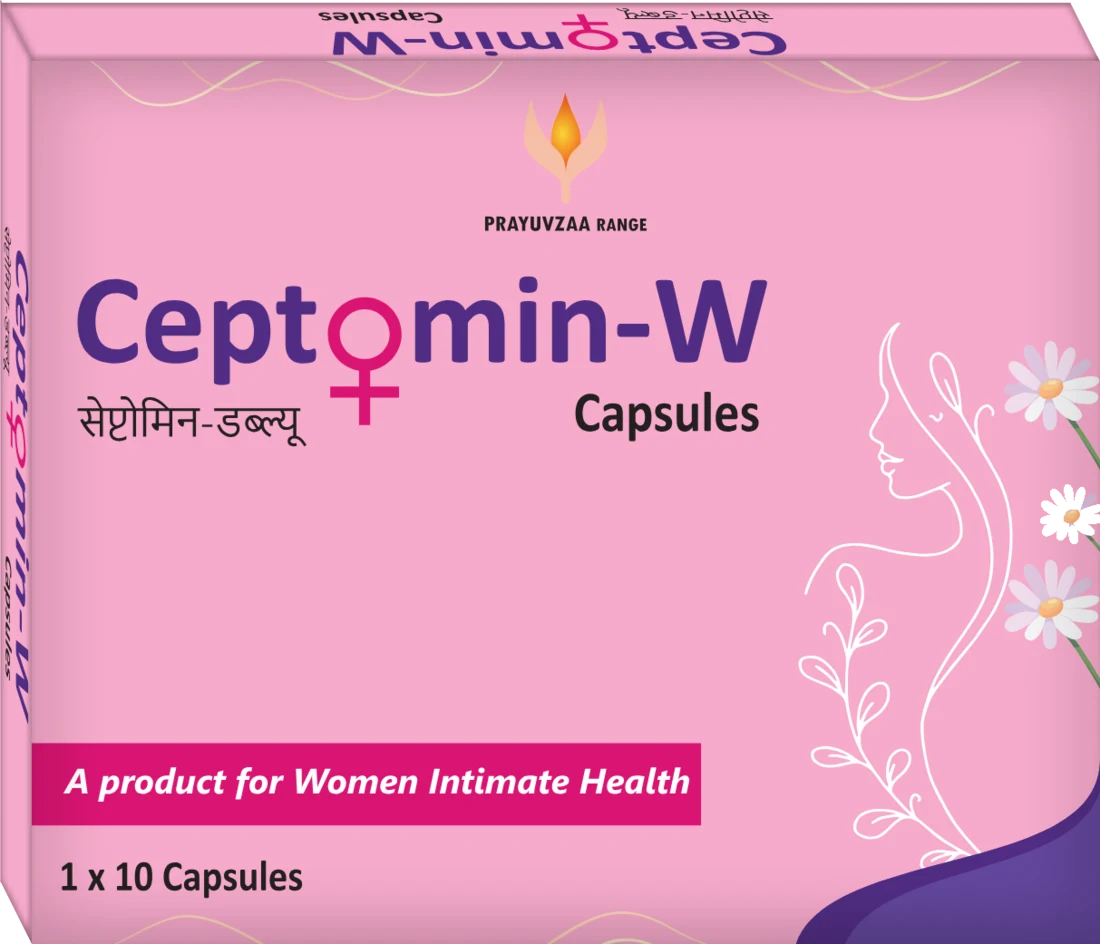
Prayuvzaa Capsule
Ceptomin-W Capsules
Ayurvedic care for intimate wellbeing.
Women's health
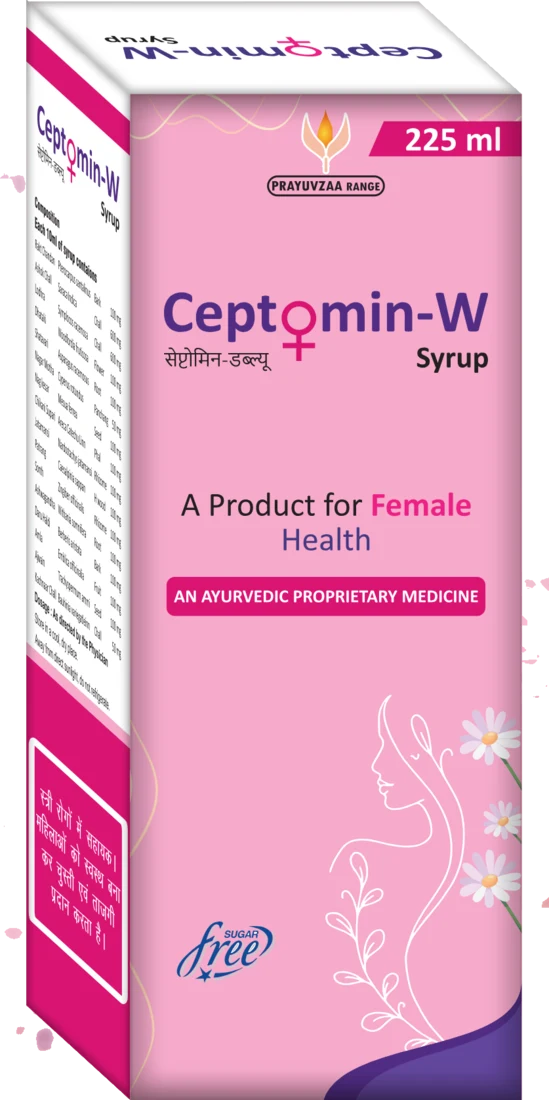
An Ayurvedic tonic through every stage of womanhood.
An Ayurvedic syrup of fifteen botanicals traditionally used in women's health, through the menstrual years, after childbirth and in midlife.
About this product
From the menstrual years to recovery after childbirth and the changes of midlife, Ayurveda has long offered women formulations for strength and balance. Ceptomin-W Syrup follows that tradition.
Its fifteen botanicals include ashoka, lodhra and dhataki, traditionally used together for uterine tone; shatavari and ashwagandha for nourishment and strength; jatamansi, valued for calm; and amla, a rich natural source of vitamin C.
The usual dose is 10 ml twice a day after meals, or as your doctor directs. Heavy, irregular or painful periods deserve a medical assessment.
Who it is intended for
Women through menstrual years, after childbirth and in midlife, as advised by a doctor.
Botanical · Bark
Saraca asoca
Why it is included
Traditionally used to tone the uterus and reduce congestion.
Strength of evidence
Traditional use Evidence level 1 of 5Documented in classical texts or long practice. Not yet tested in clinical trials.
Botanical · Bark
Symplocos racemosa
Why it is included
Traditionally used with ashoka for uterine tone.
Strength of evidence
Traditional use Evidence level 1 of 5Documented in classical texts or long practice. Not yet tested in clinical trials.
Botanical · Flower
Woodfordia fruticosa
Why it is included
Traditionally used for its astringent action.
Strength of evidence
Traditional use Evidence level 1 of 5Documented in classical texts or long practice. Not yet tested in clinical trials.
Botanical · Root
Asparagus racemosus
Why it is included
Traditionally used to balance and nourish.
Strength of evidence
Laboratory evidence Evidence level 2 of 5Studied in cells or animals. Effects in people are not established.
Botanical · Root
Withania somnifera
Why it is included
Traditionally used to build strength.
Strength of evidence
Systematic review evidence Evidence level 5 of 5Several trials pooled and appraised together.
Usually well tolerated in trials. Rare cases of liver injury have been reported. Not advised in pregnancy. Seek advice if you have thyroid, autoimmune or liver disease, or take sedatives, thyroid medicines or immunosuppressants.
Botanical · Fruit
Emblica officinalis
Why it is included
A rich natural source of vitamin C.
Strength of evidence
Clinical evidence Evidence level 4 of 5Tested in randomised trials in people, usually small or short.
Botanical · Rhizome
Nardostachys jatamansi
Why it is included
Traditionally used to calm the mind.
Strength of evidence
Traditional use Evidence level 1 of 5Documented in classical texts or long practice. Not yet tested in clinical trials.
Botanical · Dried rhizome
Zingiber officinale
Why it is included
Traditionally used to ease spasm and support digestion.
Strength of evidence
Systematic review evidence Evidence level 5 of 5Several trials pooled and appraised together.
Botanical · Heartwood
Pterocarpus santalinus
Why it is included
Red sandalwood, used to cool, purify and calm the skin and blood.
Strength of evidence
Traditional use Evidence level 1 of 5Documented in classical texts or long practice. Not yet tested in clinical trials.
Botanical · Stem
Berberis aristata
Why it is included
A golden wood rich in berberine, used in Ayurveda to purify and protect.
Strength of evidence
Traditional use Evidence level 1 of 5Documented in classical texts or long practice. Not yet tested in clinical trials.
Botanical · Heartwood
Caesalpinia sappan
Why it is included
A red heartwood used in Ayurveda for women's health and the blood.
Strength of evidence
Traditional use Evidence level 1 of 5Documented in classical texts or long practice. Not yet tested in clinical trials.
Botanical · Stamen
Mesua ferrea
Why it is included
Fragrant stamens of the ironwood tree, used to support women's health.
Strength of evidence
Traditional use Evidence level 1 of 5Documented in classical texts or long practice. Not yet tested in clinical trials.
Botanical · Seed
Trachyspermum ammi
Why it is included
A small, aromatic seed long used in Indian homes to ease wind and indigestion.
Strength of evidence
Traditional use Evidence level 1 of 5Documented in classical texts or long practice. Not yet tested in clinical trials.
Botanical · Bark
Bauhinia variegata
Why it is included
The bark of the orchid tree, traditionally used for glands and tissue tone.
Strength of evidence
Traditional use Evidence level 1 of 5Documented in classical texts or long practice. Not yet tested in clinical trials.
Botanical · Nut
Areca catechu
Why it is included
Used in small quantities in classical formulations for its astringent nature.
Strength of evidence
Traditional use Evidence level 1 of 5Documented in classical texts or long practice. Not yet tested in clinical trials.
Habitual chewing of areca nut is classified by the International Agency for Research on Cancer as carcinogenic to humans. Classical formulations use small amounts as one ingredient among many, which is very different from habitual chewing, but this is worth knowing and discussing with a doctor.
Botanicals and oils
Directions: 10 ml twice daily after meals, or as directed by a physician.
Precautions
An Ayurvedic proprietary medicine. Read the label before use. Consult a doctor before use in pregnancy or while breastfeeding, for children, or if you have a medical condition or take other medicines. Do not exceed the recommended dose. Store in a cool, dry place away from direct sunlight and out of the reach of children. Not intended for use in pregnancy unless advised by a doctor. Contains supari (areca nut) in a small amount. Heavy or irregular bleeding needs medical assessment.
Usually well tolerated in trials. Rare cases of liver injury have been reported. Not advised in pregnancy. Seek advice if you have thyroid, autoimmune or liver disease, or take sedatives, thyroid medicines or immunosuppressants.
Habitual chewing of areca nut is classified by the International Agency for Research on Cancer as carcinogenic to humans. Classical formulations use small amounts as one ingredient among many, which is very different from habitual chewing, but this is worth knowing and discussing with a doctor.

For healthcare professionals
Indications, mechanisms, positioning and the detailing aid to download are available to registered doctors, pharmacists and trade partners.
Where to find it
Availability varies by city. Write to us and we will tell you where to find Ceptomin-W Syrup near you.
Ask about availabilityDownloads
A printable summary of the composition, directions and precautions.
Open the sheetAuthenticity
Enter the code printed on your pack to confirm the product and batch.
Verify a productAyurvedic care for intimate wellbeing.
Women's health
This page is for general information and is not medical advice. Read the label before use and consult a qualified doctor, especially in pregnancy, while breastfeeding, for children or if you take other medicines.
The Wellnezz Brief
No clutter and no hard selling. Unsubscribe whenever you wish.