
The Wellnezz Concept Co

Digestion

How digestion works, common problems, warning signs and everyday care for the gut.

Ayurveda places agni, the digestive fire, at the centre of health. Modern medicine also recognises the gut as central: it is where nutrients are absorbed, where a large part of the immune system is found and where trillions of microbes live, whose role in health is an active area of research.

How it works

How it works

Digestion begins in the mouth and continues through the stomach, where acid and enzymes break down protein. In the small intestine, enzymes from the pancreas and bile from the liver complete the work and nutrients are absorbed. The large intestine reclaims water and hosts the gut microbiome, which ferments fibre into compounds that nourish the gut lining.

What strains it

  • Irregular meal times and eating late at night
  • Low fibre and low water intake
  • Stress, which slows or speeds the gut
  • Repeated courses of antibiotics
  • In infants, an immature digestive system that is still learning

Habits that protect it

  • Eat at regular times and stop a few hours before bed
  • Fill half the plate with vegetables, pulses and whole grains
  • Enjoy traditional digestive spices such as ginger, ajwain, cumin and hing in cooking, if they suit you
  • Chew slowly and eat without screens
  • Include curd or other fermented foods if they suit you

See a doctor if you notice

  • Blood in stools or black stools
  • Weight loss without trying
  • Persistent pain, vomiting or difficulty swallowing
  • In infants, poor feeding, fever or a swollen tummy
The health journey

Your health journey

Six stages, and where to find help at each one. Scroll sideways on smaller screens.

01 Lifestyle

  • Irregular meal times and eating late at night
  • Low fibre and low water intake
  • Stress, which slows or speeds the gut

02 Early signals

  • Blood in stools or black stools
  • Weight loss without trying
  • Persistent pain, vomiting or difficulty swallowing

04 Testing

  • Clinical examination and history
  • Stool tests, including for infection or hidden blood
  • Testing for Helicobacter pylori
  • Endoscopy if there are warning signs

05 Management

  • Eat at regular times and stop a few hours before bed
  • Fill half the plate with vegetables, pulses and whole grains
  • Enjoy traditional digestive spices such as ginger, ajwain, cumin and hing in cooking, if they suit you

06 Long-term wellbeing

Before your appointment

Questions to ask your doctor

Writing questions down helps you get the most from a short consultation.

Make a list of your medicines
  1. Are my symptoms likely to be caused by food, stress or something else?
  2. Do I need any tests, such as for Helicobacter pylori?
  3. Which symptoms mean I should come back sooner?
Formulations

Related products

Speak to your doctor or pharmacist about whether any of these are right for you.
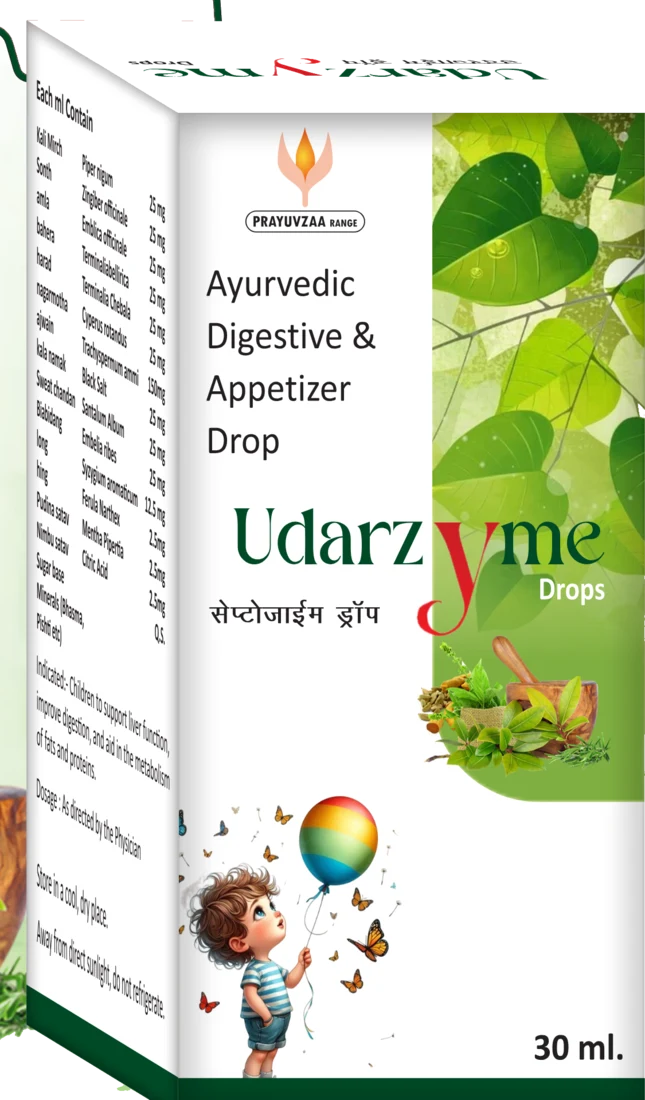
Udarzyme Drops pack
Prayuvzaa Oral drops

Udarzyme Drops

Gentle Ayurvedic digestive drops for little ones.

Digestion

Udarzyme Drops
Udarzyme Syrup pack
Prayuvzaa Syrup

Udarzyme Syrup

Ayurvedic support for everyday digestion.

Liver · Digestion

Udarzyme Syrup

Sources

  1. MedlinePlus, US National Library of Medicine. Digestive diseases.

Last updated 15 October 2026. This page is for general education and does not replace advice from a qualified doctor.

The Wellnezz Brief

The Wellnezz Brief: thoughtful health reading, sent occasionally

No clutter and no hard selling. Unsubscribe whenever you wish.